 The Ministry is
the office through which the Church administers the Word and Sacraments, which
Christ has committed to her for the evangelization of the world.
The Ministry is
the office through which the Church administers the Word and Sacraments, which
Christ has committed to her for the evangelization of the world.
JOSEPH STUMP
(From The Christian Faith [New York: The Macmillan Company, 1932], pp. 375-85.)
The Ministry is
the office through which the Church administers the Word and Sacraments, which
Christ has committed to her for the evangelization of the world.
Its
Necessity. While the evangelization of the world is a work laid upon the
whole Church, it is not intended by the Lord that every Christian shall be an
actual preacher of the Gospel. The gift of the Word and Sacraments carries with
it the divine will for their proper administration. The New Testament shows that
while ordinary members of the Church sometimes preached the Gospel (Acts 8:4;
11:19), and the deacons Stephen and Philip were active in preaching the Word
(Acts 6:9 seq.; 8:5 seq.), the office of the ministry of the Word was one which
was regarded as specifically placed in the hands of certain individuals (Acts
6:4). These individuals were first of all the apostles (Matt. 10; Luke 6:12
seq.; Acts 2:14). But while the ministry of the Word was included in the
apostleship, the office of a minister of the Word was never identical with the
office of an apostle. The work assigned to the apostles was larger and more
comprehensive than simply preaching the Word. They were to lay the foundation of
the Church through their personal testimony concerning Christ as eyewitnesses of
His life, death and resurrection (Matt. 16:18; John 15:27; Acts 1:22). They
were, therefore, during a period of three years, specially trained and prepared
for the work by Christ, and endowed with the gift of the Holy Ghost on
Pentecost. They were personal witnesses of the facts of the Gospel, which they
proclaimed; they possessed an inspired knowledge of the Gospel truth; they
promulgated the basic and normative teaching concerning Christ; they performed
miracles in proof of their divine commission; and their parish was the world.
They had and could have no successors in the apostolic office, because no other
persons had or could have the same qualifications.
But while there
could be no addition to the apostolate, it is manifest that the apostles needed
and received the help of others in the preaching of the Word and the guidance of
the Church. Paul was accompanied and assisted on his missionary journeys by
Timothy, Titus, Barnabas, John Mark, Silas and others. And when he himself
removed from a certain place, men were appointed to continue the work. Lists of
the offices which sprang up in the Church for the furtherance of the cause of
the Gospel are given by St. Paul (1 Cor. 12:28; Eph. 4:11); and these offices
are declared by him to be the result of God’s will. They had to do with all the
varied work of the Church, preaching and teaching, evangelistic and pastoral
work, works of mercy, government and the like. It is evident from Paul’s letter
to Timothy that the outstanding and most important offices came to be those of
the bishop and the deacon (1 Tim. 3). The office of an elder or presbyter was
identical with that of a bishop, only under another name. (In Tit. 1:5,7 the
names bishop and elder are applied to the same official.) These offices were
filled, not by an immediate call from God, but through appointment by an
apostle, or election by the congregation, or both.
No
ecclesiastical constitution was framed by inspiration and handed down for the
guidance of the Church in later years. The New Testament offices were the
outgrowth of the peculiar circumstances and needs of those days. The Church has
the right to add other offices from time to time, if the exigencies of the work
demand it. But the fundamental office of the ministry of the Word and Sacraments
must remain (Rom. 10:14,15). The Means of Grace must be furnished with
individuals specially set apart for their administration. As pastor of the
congregation the minister of to-day engages in the activities of a number of
offices, such as preacher, teacher, elder, evangelist, pastor, and head of the
congregation, which seem to have been distinct in apostolic times, but which
were all given “for the perfecting of the saints, for the work of the ministry,
for the edifying of the body of Christ” (Eph. 4:12).
Nature of
the Ministry. The ministry, as already pointed out, is not identical with
the apostolate, but is the office of the Word and Sacraments. The parish of the
minister is not the world, as it was for the apostles, but a certain definite
and circumscribed field of labor to which he is called.
The ministry is
not an order into which the selected individual is admitted and in which he is
endowed with certain prerogatives not enjoyed by other Christians. As a man and
a Christian he remains on a par with his fellow believers, and has no
preeminence or special privileges. He is not a lord over God’s heritage, but a
servant of Christ, and for His sake a servant of all. But by virtue of his
office he wields certain powers, bears certain responsibilities, and is entitled
to a certain respect and honor. He is an ambassador for Christ, through whom God
beseeches men and who prays men in Christ’s stead to be reconciled to God (1
Cor. 5:20). In the services in God’s house he is alternately the representative
of God declaring His will to the people, and the spokesman of the congregation
in offering up thanksgiving, petitions and intercessions. In the latter case he
is included in the congregation, and speaks in behalf of all. (In liturgical
language, the part of the service in which the minister declares God’s will is
called the sacramental, and the other part is called the sacrificial element in
worship. Where high liturgical forms prevail, the pastor faces the congregation
in the former case, and the altar in the latter.)
The ministry is
not a priesthood. The only priesthoods remaining in the New Testament are the
high priesthood of Christ and the spiritual priesthood of all believers (1 Pet.
2:5,9). The latter is shared by the minister with all his fellow Christians. He
offers no sacrifices to God except the sacrifices of praise and thanksgiving,
and these he offers in common with the congregation. (In the Roman Catholic
Church the minister is regarded as an actual priest who offers a real sacrifice
to God in the Mass.)
The ministry is
an office in the Church, intrusted to certain individuals who have been
specially prepared and trained for it, and who have been solemnly set apart for
its duties. It is often called, and very suitably, the office of the Word and
Sacraments. But there belongs to it also the Office of the Keys.
The ministry is
an office given with the Word and Sacraments and indispensable for their proper
and efficient administration. Though the obligation to employ the Means of Grace
for the evangelization of the world rests on the whole Church, the obligation
and the right to administer them does not belong to each individual as such, but
to the congregation as a whole. The calling of a pastor is, therefore, not an
agreement among the members of a congregation to transfer to one individual the
personal rights inherent in each member to administer the Means of Grace, but
the appointment of a person to fill an office which belongs to the whole
congregation of believers. (The United States possesses the office of president,
and each citizen has a right to vote for an incumbent for that office. But each
voter is not really a president who transfers his office to one particular
person to administer for him.)
Since, as we
have seen, the office of bishop and presbyter is identical in the New Testament,
there is no episcopate existing by divine right (De jure divino), and no
apostolic succession of bishops. The adoption of an episcopal or non-episcopal
form of government is entirely a matter of expediency; and where the Church
possesses the episcopate, it does so by human right (De jure humano), and
not by divine command. (Forms of government are adiaphora. Thus, the
Lutheran Church has bishops in Sweden, but none in America.)
The
Call. The ministry is an office to which men must be called, and which they
must not otherwise undertake to exercise. (Augs. Conf. XIV, “No man should
publicly in the Church teach or administer the sacraments except he be rightly
called.”) Being an office in which the incumbent is God’s representative and
spokesman, it must be filled in accordance with the divine will. In the past
this will has sometimes been expressed directly to the individual, as in the
case of Moses, the prophets and the apostles. The call which came thus directly
from God was an immediate one. (Aaron was called through Moses by divine
direction. This was really a variation of the immediate call, and needs no
separate classification.) The call which comes through the Church, and which is
now the only kind that is given, is a mediate call.
There is no
inner call to the ministry, but only the external call of the Church. There is,
however, an inner conviction of the individual that he ought to become a
minister, which is wrought by the Holy Ghost through the Word and which is
sometimes spoken of as an inner call. But this is a mistaken use of the word
“call,” and is calculated to lead to confusion. An inner call in the true sense
of the word would have to be an immediate one; and no immediate calls are any
longer given. Men have sometimes imagined that they had an “inner call” when it
was painfully evident to every one else that they had neither the requisite
natural gifts nor the proper training for the office.
It is the duty
of the Church carefully to select and train men for the holy office of the
ministry, and she should not set men apart for it without due consideration of
their physical, mental and spiritual qualifications. She is to lay hands
suddenly on no man (1 Tim. 5:22), but is to see to it that only those are
admitted to the office who have the requisite natural gifts, common sense, and
Christian faith and piety; and who have received the necessary academic and
theological training. Ordinarily this training ought to include a full course in
college or university and in a theological seminary. Few exceptions, and those
only for the best of reasons, should be made. The demand for quality in the
ministry to-day is very great. The Lord not only needs men for the ministry, but
He needs gifted and well-trained men.
The man who
sets out to prepare for the Gospel ministry should have an inner conviction that
the Lord needs and desires him for the work, and a determination to give his
life and strength to it. This conviction and determination may be simply the
result of his own reflection and prayers. Perhaps the desire of parents and the
influence of pastors, teachers and others may have had a share in shaping his
decision. Special providential dispensations may have turned his mind to the
ministry.
Ordination. The congregation elects, but the synod approves or
disapproves of the chosen individual as a proper man for the Christian ministry.
He is subjected to a careful examination as to his mental and spiritual fitness
for the work, and if approved he is ordained. This ordination is usually
performed by the clerical officers of synod, but may be performed by any
minister or ministers authorized by the synod.
Ordination is
not a sacrament, and conveys no special gift through the laying on of hands. It
is a rite or ceremony in which the Church sets its approval upon the man as
fitted for the office to which he has been called, and solemnly sets him apart
for it, praying that God may give him the grace and strength needed to perform
his work faithfully and well. The spiritual benefit comes in answer to the
prayer, and not as a result of the laying on of hands.
The
installation takes place when the chosen pastor takes charge of his parish, or
soon after. Since ordination is not admission into an order, but a certification
that the individual has been properly called to a definite work, usually in a
parish, there is in essence not a very great deal of difference between
ordination and installation. There is bound to be much similarity in the
formulas used. The difference in the effect of the two acts may, however, be
described in this way, that ordination certifies to the Church and the State
that the individual is duly authorized to preach, administer the sacraments, and
perform other ministerial acts, including marriage, which has a legal as well as
an ecclesiastical side; while installation, on the other hand, certifies to the
members of a definite parish that this particular person is their duly elected
and authorized pastor, who now formally accepts the weighty obligation of caring
for their spiritual wants, and to whom, therefore, they owe all honor, respect
and obedience in the Lord.
Important as
ordination and installation are as a matter of Christian order, it is
conceivable that, in emergencies, when no minister can be secured to perform the
ordination and installation, a man who has been properly called as pastor by a
congregation or congregations might assume charge without ordination, and
perform all ministerial acts except marriage, or that he might be ordained by
laymen appointed by the congregation. (On account of its legal side the marriage
ceremony dare be performed only by one who has been properly empowered by the
state to do so.) It is the call, and not the ordination, which makes the man a
minister in the sight of God.
Since the call
really makes a man a minister, it is not proper to ordain a man who has not
received a regular call to some definite work. To ordain without a call carries
with it the notion that the ministry is an order into which the individual is
admitted. Since, however, synods and other general bodies are the Church in a
collective and representative capacity, they have a right to call, as well as
congregations. But it must be a call to a definite work, and not a call to go
forth and preach anywhere in general and nowhere in particular.
Whether a man
should be reordained when he comes from another communion and desires to serve
in our Church is a question of expediency, whose answer depends to a large
extent on the nature of the Church from which he comes. If it is a Church which
is sound on the great fundamental doctrines of Scripture, a confession of the
Lutheran faith on those doctrines on which the other Church differs from us
would seem to be sufficient without reordination. But if it is a Church which
repudiates doctrines fundamental to salvation, or one which like the Roman
Catholic differs radically in its whole view of Christianity, it is better to
reordain on the strength of a call from some Lutheran parish.
The
administration of the Word and sacraments must not be undertaken without a
regular call (Augs. Conf. Art. XIV). Teachers in Sunday school and other schools
of the Church are to be regarded as the pastor’s assistants in the instruction
of the young. While a layman may and should privately make known and teach the
Word among his friends and acquaintances, he should not ordinarily preach or
administer the sacraments. Baptism in case of emergency is an exception.
Preaching by a theological student or other layman in response to an invitation
from a congregation or from an administrative officer of synod is not to be
regarded as preaching without a call, but as preaching in response to a call for
special service.
Sphere of
Work. The minister’s sphere of work is found in the particular field to
which he has been called. That is the place where he is to administer the Word
and sacraments. This does not mean that he may not, in response to special
calls, administer the Means of Grace anywhere else, but that his own field and
not the world is his parish. His work is among the people to whom God has called
him to minister, and includes first of all the members who belong to his
congregation or congregations. But it also includes an obligation to the
community which his parish may reasonably be supposed to cover. To confine his
work to the routine administration of Word and sacraments among the members of
his flock is to fail to realize die breadth of his mission and the greatness of
his opportunity and responsibility. Christ wills that the world shall be
evangelized; and the world includes the indifferent, impenitent, unbelieving and
hostile at home as well as the heathen in darkest Africa. Christ’s command is to
go into the highways and hedges and compel them to come in. The adult
catechetical class should be a standing institution in every parish, and
constant efforts should be made to persuade those outside of the Church to
attend. The pastor’s efforts should be directed to meeting the needs of his own
people and of the unchurched, and not to proselyting from other Churches.
Administering Word and Sacraments. The chief duty of ministers
is that of preaching the Word, and they are to preach it in season and out of
season (2 Tim. 4:2). As ambassadors for Christ they are to beseech men to be
reconciled to God, and are to be instruments in the hands of the Holy Spirit for
the conversion and sanctification of souls. While it is not human learning,
skill or eloquence that converts men, but the power of God, that power must come
through the Word which the minister proclaims. If, therefore, his proclamation
is weak, unclear, confused or unsound, how can the Holy Spirit through it
convert and sanctify? It is the truth which converts and saves. But it will and
can do this, not magically but by the pressure of the truth clearly,
intelligibly and forcefully presented to the mind. The minister must seek,
therefore, to be an efficient instrument of the Holy Ghost, and to present the
truth soundly and intelligibly. He must rightly divide the Word of truth,
presenting it according to the needs of the people, and particularly proclaiming
Law and Gospel in due proportions. He must declare the whole counsel of God,
withhold nothing, and add nothing. He must seek to convert the sinners and to
edify the saints. At the basis of his preaching should lie a true psychology. He
must aim to enlighten the intellect, move the feelings and persuade the will. If
he aims only at enlightening the intellect, he delivers an essay, and not a
sermon.
He must
administer the sacraments in accordance with their institution, and do so in a
proper spirit of reverence, and not in a perfunctory manner. He should emphasize
the importance and meaning of the sacraments; urge upon parents the necessity of
having their children baptized in early infancy; and set forth the importance
and blessedness of participation in the Lord’s Supper.
Demitting
the Ministry. Since ordination does not confer an indelible character, and
it need not be said that “once a minister always a minister,” a man who has been
ordained may under certain circumstances cease to be a minister. This is the
case if he voluntarily demits the ministry and devotes himself to a secular
pursuit. It is also the case, if the Church in the exercise of its disciplinary
power deposes him from the office. But it is a mistake to suppose that a man has
ceased to be a minister because he is temporarily without a parish, or is forced
to retire from active service by age or ill-health, or accepts some more general
office in the Church such as secretary or superintendent of missions and the
like, or teaches theology. In all these cases he still has authority to
administer the Word and Sacraments, and does so from time to time in answer to
calls for temporary service. But on the other hand it is wrong for a man to give
up the actual work of the ministry and devote himself to secular pursuits
without giving up the name and title of minister.
Deacons and
Deaconesses. The other offices which have come down to us in name and
essential features from apostolic times are those of the deacon and the
deaconess. Deacons were chosen in the early days of the apostolic Church, in
order to relieve the apostles from the necessity of serving tables and to enable
them to devote themselves more completely to the preaching of the Word (Acts 6).
Essentially the same purpose is served by deacons now. They are chosen by the
congregation to assist the pastor in every needful way and particularly to
attend to the temporal affairs of the Church. They should be men of discretion
and of sound Christian character. They should be duly and solemnly installed in
office and be made acquainted with the duties and obligations which rest upon
them.
The office of
deaconess, which existed in the early Church, has in its modern form been
developed into a helpful agency in the Church’s work of mercy. To a large extent
deaconesses have found a place in hospitals; but they have also proved
themselves valuable assistants to the pastors in congregational work, when
assigned to that task.
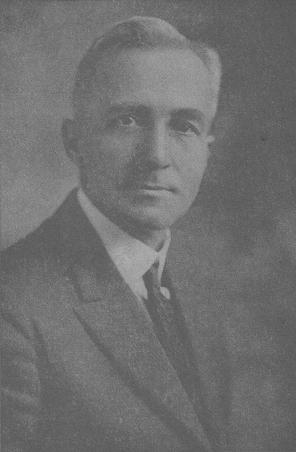
Joseph
Stump
(1866-1935)