Preface to Vom Sakrament des Altars
HERMANN SASSE
 Around the Lord’s Table is gathered the church. At the Table of the
Lord the church knows what it most profoundly is: the body of Christ. No doubt
of this since the days of the apostles. Where the Table of the Lord is deserted,
where the Lord’s Supper is no longer known or celebrated, there the church dies
beyond rescue.
Around the Lord’s Table is gathered the church. At the Table of the
Lord the church knows what it most profoundly is: the body of Christ. No doubt
of this since the days of the apostles. Where the Table of the Lord is deserted,
where the Lord’s Supper is no longer known or celebrated, there the church dies
beyond rescue.
Inaccessible to rational explanation is the fact of this connection
between the church and the Lord’s Supper, between the body of Christ which we
are given at the altar and the body of Christ which is the church. All along
their journey through nineteen centuries Christians have been enlivened by this
fact. Here we may find a clue why in our days the Sacrament of the Altar has
become a matter of such burning urgency. So it was also in the second third of
last century, and perhaps not so again since the time of the Reformation.
Where this connection between the church and the Lord’s Supper still
holds, then the question of what the church is cannot be faced without the
question what is the Lord’s Supper? Whether the church has a future is bound up
with whether the Lord’s Supper lives on enliveningly. These are questions which
Christians of all churches cannot but face as we move toward the end of the
second thousand years. The question of the Lord’s Supper is not something we may
just sit and think about; in all churches theology has again earnestly engaged
the question of the Lord’s Supper.
When these questions are thus put, then they are surely also put to the
Evangelical Lutheran Church. We have indeed ever and again maintained that we
have Scriptural dimensions of what the Lord’s Supper is which in other churches
have been blurred or forgotten. For us then the question of the Lord’s Supper
probes to the bottom of our integrity whether we have held true to the
Scriptural Doctrine of the Lord’s Supper, faithfully confessing, without
admixture, what our Lord has given us to confess. Or have we exchanged this for
the mess of potage offered by the Enlightenment in the way of sacramental
theorizing.
“You say, ‘I am rich, full up, and have need of nothing,’ and do not
know that you are wretched, pitiable, poor, blind, and naked.” These are the
words of him who is the Lord and judge of all Churches. If we do not know
ourselves to be struck by them we have ceased to be a Lutheran Church, a church
of daily contrition and repentance. Before the judgment of these words we can
only confess how poverty-stricken we have become. When first our Church made
public confession of the faith, it was bold to say in Article 24 of the Augsburg
Confession: “Without boasting it is plain for all to see that the Mass is
celebrated among us with greater devotion and more earnestness than among our
opponents.” Could we still say such a thing? Has not our Church participated in
the grievous decline of the Sacrament which now for two hundred years has been
spreading through the world of Protestantism? In many places the Sacrament has
already departed.
We are then confronted with the question what has become of the
Doctrine of the Sacrament of the Altar? For our fathers inextricably bound up
with the Doctrine was the celebration and administration of the Sacrament. Here
doctrine is not some theoretical doctrinalizing, but the quickening message
given the church to proclaim. Still today there are many pastors in the
Evangelical Churches of Germany who confess the Doctrine of the Lord’s Supper as
Luther did. And there are many Christian people who go to the Lord’s Table
confessing the Sixth Chief Part of the Small Catechism. However, we may not
deceive ourselves by supposing that this is true of anything more than a
minority among our Evangelical people. We recognize this fact without laying any
judgment on anybody else.
There is no denying that this situation is the outcome of a long
historical development. This observation does not relieve us of responsibility.
A generation ago who could have imagined that the question of the Sacrament
could again become so fateful a matter for theology and church? If such a change
is possible, then a later generation may perhaps marvel at how it was possible
at such a time for there still to be even learned theologians who could go on
talking about the Doctrine of the Lord’s Supper as confessed by Luther in such a
shallow and dilettantist way? Still today along the highways and byways of
theology you can hear talk of not being bogged down in the exegesis of the
sixteenth century. If Luther had the benefit of the last generation’s advances
in exegesis, he would certainly no longer teach of the Lord’s Supper as he did
back then. When the recognition of what is going on here is joined with the
basic respect due to a great man now departed, and so one who can no longer
defend himself, there may then be a stirring of effort to take seriously and to
understand what he said as he faced the Last Judgement.
If any one shall say after my death, “If Luther were living now,
he would teach or hold this or that article differently, for he did not
consider it sufficiently,” etc., let me say once and for all that by the grace
of God I have most diligently traced all these articles through the
Scriptures, have examined them again and again in the light thereof, and have
wanted to defend all of them as certainly as I have now defended the sacrament
of the altar...I know what I am saying, and I well realize what this will mean
for me before the Last Judgment at the coming of the Lord Jesus Christ. (LW
37, 360f.)
If we grasp the import of these words, it follows that what Luther
confesses as the freight of the Words of Institute can no more be relativized as
outmoded exegesis than can that which he confesses with the Doctrine of
Justification. This recognition carries within it what could bring in the day
-- God grant it may come before it is too late -- the day of
repentance, the day when we Evangelical theologians in Germany finally recognize
what it is perilous not to recognize: the misuse of freedom in the Gospel. This
may be recognized when any one of us claims it as his right to follow his own
opinion, and put to the Christian congregation some personal view which has won
his approval, which he recently read somewhere or other, and was much impressed
by. This instead of proclaiming what we were pledged before God to proclaim in
that most solemn hour of our lives at our ordination. Such misuse of “freedom in
the Gospel” hastens the end of the Church of the Reformation.
The overwhelming majority of us were pledged to the Lutheran Doctrine
of the Lord’s Supper because it is given us in Scripture. This could even be
said of the clergy when the Prussian Union was imposed. At ordination we were
committed to the confession of our church “against which we would neither speak
nor write privately nor in the exercise of the office (öffentlich).” And this
held so long as were not released from our vow. Pathetically hollow then is the
claim of theological maturity by those who treat the confession of our church as
if it were not something we pledged our loyalty to at our ordination. In the
Church of the Lutheran Reformation we hardly need to speak against the notion
that faithfulness to the doctrine given us by Scripture and confessed by the
church is some sort of bondage. This was the faithfulness which brought Luther
into his Reformation work.
The Lutheran theologians of Germany cannot but face up to the poverty
and deprivation of their Church. Dilettantism and subjectivism are more than we
can bear. By these the vital questions of theology are simply not engaged. First
and vital engagement is with the straightforward statement of the doctrine
confessed by the church. The more this is done, the more we in our century will
be part of the great consensus (AC 1) of Lutheran doctrine, and so also in that
of the Lord’s Supper.
We have in recent years been much at the receiving end of being told
that there is not any more a Lutheran Church. The same is said of the Reformed,
and even the pope himself has had to put up with some savant at his writing desk
in Berlin who consigned the Roman Catholic Church to the cloud cuckooland of
ideas. That our Church has disappeared we need fear no more than the murmurings
in the sixteenth century about this Lutheranism and that Lutheranism. Already at
the time when the Formula of Concord was taking shape we had to hear such
things.
Our adversaries have had the effrontery to pretend and proclaim to
the whole world that among our churches and their teachers there are not two
preachers who are agreed in each and every article of the Augsburg Confession.
(SD 12, 3)
Even if those, who do not really care whether our Church exists or not,
were successful in cavilling our church out of existence in our day, it would
still remain a weighty historical fact. And even if it were the case that in our
day only a few Lutherans remain, they would yet be standing in that “great
consensus.” Those who are united in that consensus of what is believed, taught
and confessed in the true church, are united not only with those confessing
along with them today, but also with all those who before us confessed the true
faith, and with those not yet born who will in their day confess the same
confession. The more profoundly aware we are of this confessional communion the
more keenly we will be alert for that consensus among those now living, a
consensus surely greater than we are bold to ask or think. And even if this were
not so, a task remains for those who with heart and mouth confess the Doctrine
of the Sacrament of the Altar confessed in the Lutheran Reformation. That is the
task to confess to all Christians everywhere of every confession, what by the
grace of God has been given to the Lutheran Church to confess, to confess what
Scripture gives us to confess of the Lord’s Supper. Whatever the Lord has
entrusted to our Church truly to confess belongs to all Christians.
From this it follows that there are then two things for Lutherans to do
regarding the Lord’s Supper. First, profoundest pondering of the Doctrine of the
Lord’s Supper of our own Church. This cannot be done without humble testing of
the Doctrine by the Scripture. The second thing to be done is the joyful
proclamation of the truth given us to confess and proclaim. That is no longer
the Lord’s gift if we attempt to keep it only as ours; it is for all Christians,
and this the more urgently so as they are drawn in our day to earnest probing of
the Lord’s Supper.
As a step toward preparing to engage this task we hope this book may
play some small part.
Translated by Norman Nagel
From Vom Sakrament des Altars: Lutherische Beitraege zur Frage des
heiligen Abendmahls. Edited by Hermann Sasse. Leipzig: Doerffling and
Francke, 1941.
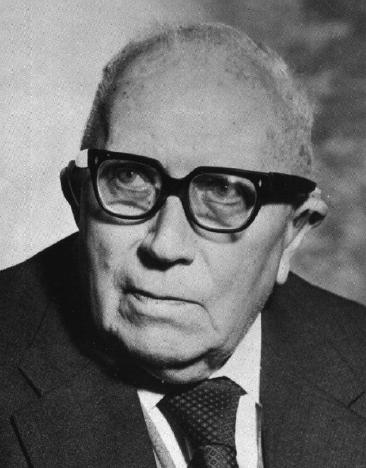
Hermann Sasse
Return to
the Lutheran Theology Web Site