The English Bible
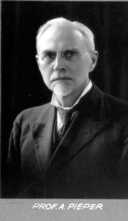
AUGUST O. W. PIEPER
(From “Our Transition into English,” Wisconsin Lutheran Quarterly,
Vol. 100, No. 2 [Spring 2003], pp. 92-93; a translation of “Unser Übergang
ins Englische,” Theologische Quartalschrift, Vols. 14-15
[1918-19].)
 You
cannot read a single page, even a single column, in the King James Version or
the Revised Version -- especially in Paul’s epistles -- without
bumping up against words and phrases that are unenglish, artificial, unclear,
and difficult. The shortcomings of the English Bible are primarily two. For the
most part, it translates the idioms and expressions of the original languages
too literally, often literalistically, and this makes it difficult, if not
incomprehensible, for the reader. And secondly, the English Bible too often
lacks the vitality, the freshness and power of the original Hebrew and
Greek.
You
cannot read a single page, even a single column, in the King James Version or
the Revised Version -- especially in Paul’s epistles -- without
bumping up against words and phrases that are unenglish, artificial, unclear,
and difficult. The shortcomings of the English Bible are primarily two. For the
most part, it translates the idioms and expressions of the original languages
too literally, often literalistically, and this makes it difficult, if not
incomprehensible, for the reader. And secondly, the English Bible too often
lacks the vitality, the freshness and power of the original Hebrew and
Greek.
There
is an antique quality to the language of the King James Version, which has been
remedied only slightly in the Revised Version. The English language changed much
more thoroughly and much more rapidly than German did, and in so doing it
distanced itself from the language of its Bible. By contrast, Luther’s German
Bible helped to create the German language. That accounts for the fact that
Luther, permeated with the message of the Scripture, filled with the spirit of
Paul, could produce a truly German Bible that is immediately understandable to
Germans of every place and time. The translators of the King James Version, on
the other hand, used many words and expressions from a centuries-old language
which quickly went out of use. Wherever you look in the English Bible, you come
across words and expressions which at one time were perfectly good English but
are no longer in common use (cf. the jaw-breaker “but nourisheth and cherisheth
it,” Eph 5). The English pastor preaches in a language different from his
Bible.
This
shortcoming has found its way into the language of English worship. It is
nothing less than torturing a language to pray:
Heavenly Father, who inhabitest the high and holy place and was justly
wroth ... Thou abhorrest iniquity and lovest righteousness ... world without
end. Amen.
Prayer language like that pushes God into the distance; it builds a wall
between the believer and his God. English-speaking people all over the world
have one kind of language in their Bible, their worship, and their prayers, but
use a different language in their everyday life. And isolating one’s “Sunday
language” from the rest of his life will play a major role in lessening the
effect religion will have on a person. If the language of our Bible, of our
worship services, of the sermon, of the catechism, of our hymns and prayers is
to take hold of our heart and dominate our thinking, feeling, and will, then it
dare not seem strange to us, or obscure, old-fashioned, and awkward.
If the
English-speaking segment of our membership is to have the gospel as abundantly
as those who retained German, then let there be no secret about the fact that we
need a new English Bible. We must undertake a revision much more extensive than
the American Revised Version. What we really need is for God to give us an
English Luther, filled with his spirit and a master of the English language,
somebody who can make Moses and the prophets, Christ and the apostles speak
English, just as Luther made them speak German. God must provide sanctified
poets who will not only translate psalms and church hymns into English, but who
can put them into idiomatic English.
Return to
the Lutheran Theology Web Site Home Page