Shall Women Preach in the Congregation?
An Exegetical
Treatise
J. L. NEVE
(From The Lutheran Quarterly, Vol. XXXIII, No. 3 [July 1903], pp.
409-13.)
 There are mainly three passages of Paul dealing with this question,
and whether it shall be answered in the negative or in the affirmative, a
careful exegesis of these three Pauline passages will have to decide. Other
words of Scripture incidentally touching upon this theme always will have to
be interpreted in the light of the words of Paul to the Corinthians and to
Timothy, where he in an unmistakable language establishes a rule not for one
congregation only but “for all the assemblies of the saints” (1 Cor.
14:33).
There are mainly three passages of Paul dealing with this question,
and whether it shall be answered in the negative or in the affirmative, a
careful exegesis of these three Pauline passages will have to decide. Other
words of Scripture incidentally touching upon this theme always will have to
be interpreted in the light of the words of Paul to the Corinthians and to
Timothy, where he in an unmistakable language establishes a rule not for one
congregation only but “for all the assemblies of the saints” (1 Cor.
14:33).
The first passage we have is 1 Cor. 11:4-16. In verse 5 it reads:
“But every woman that prayeth or prophesieth with her head uncovered
dishonoreth her head”; and in the 13th verse: “Judge in yourselves: is it
comely that a woman pray unto God uncovered?” These verses show that in the
meetings of the Corinthian Christians the women also took part in prophesying
and praying.* This, Paul does not forbid here; he
denounces only the manner in which they do it; neglecting to cover their head.
Here we ask: Did not Paul then tacitly permit the women to prophesy and pray
in public meetings? Meyer, pointing to chapter 14:34, where silence is imposed
upon them, and to 1 Timothy 2:12, where they are forbidden to teach, says: it
has to be taken into account that in these two passages the public assembly of
the congregation as such – the whole ekklhsia – is
spoken of. There is no sign of such being the case here, where he does not
forbid the prophesying and praying of the women, and at the same time cannot
mean family worship simply. Therefore Paul here must mean smaller
meetings for devotion in the congregation, more limited circles assembled for
worship, such as fall under the category of a church in the house (compare
chapter 16:19; Rom. 16:5; Col. 4:15). Paul’s readers understood just what kind
of meetings were meant, because he wrote on the basis of the information
received from the Christians in Corinth.
The second passage is 1 Cor. 14:34-36: 34. “As in all churches of the
saints, let your women keep silence in the churches: for it is not permitted
unto them to speak; but they are commanded to be under obedience as also says
the law.” 35. “And if they will learn anything let them ask their husbands at
home; for it is a shame (aiscron, unbecoming,
disgraceful) for women to speak in the church.” 36. “What? came the word of
God out from you? or came it unto you only?”
Here in plain words Paul demands that the “women keep silence in the
churches,” “as in all assemblies of the saints.” Meyer insists upon connecting
the last clause of verse 33 with the beginning of 34, and reads (with Luther
and with Weizsaecker in his careful translation of the New Testament) as
quoted above. Note that Paul here speaks of a speaking of the women in the
public congregation, in the ekklhsia. Some very
modern exegetes have tried to evade the simple and obvious meaning of Paul’s
words by pointing to the word speaking, lalein, in verse 34. They say speaking is not
teaching, and then they interpret that the women at Corinth had harmed
the peace of the congregation by too much talking and gossiping, and that Paul
here was forbidding only such unedifying and frivolous conversation. Is such
an interpretation admissible? Five counter-arguments speak against it:
1. Nowhere in the letters of Paul to the Corinthians is there any
indication that the peace of the congregation was especially disturbed by too
much talk of the women.
2. True, lalein can have the meaning of mere
talking, of simply employing the organs of speech; but it can also mean
exactly the same as teaching. An example is Romans 7:1, “For I speak (lalw) to them that know the law.” There is therefore no
reason why speaking here cannot mean teaching, preaching.
3. From the remark, verse 34, “it is not permitted unto them to
speak; but they are commanded to be under obedience, as also says the
law,” we see that Paul means here speaking as an act of independence. The
woman shall be subject to her husband and therefore shall not speak publicly
in the church, which is unbecoming to her. This argument would not suit the
idea of Paul merely forbidding the women to become engaged in talking,
gossiping.
4. According to verse 35, the women, in the public congregation,
shall not ask questions even for their own instruction, but shall go with such
questions to their husbands at home. Therefore Paul must mean public speaking
(putting questions) in the services of the congregation where religious
instruction was given and received, and cannot refer to indiscriminate
talking.
5. With his remark in verse 36, Paul wants to say: The church at
Corinth is not the mother church, having the right to establish customs for
other churches. Neither is she the only one existing. The same gospel has gone
to others who then would also have the right to originate customs and peculiar
habits. And what a confusion and disorder that would bring into the Church if
every individual congregation was permitted to introduce new customs in
questions like this! These words would be unintelligible if Paul here meant
nothing but idle talk on the part of the women.
Now we come to the third passage: 1 Timothy 2:12-14.
12. “But I suffer not a woman to teach, nor to usurp authority over
the man, but to be in silence. 13. “For Adam was first formed, then Eve.” 14.
“And Adam was not deceived, but the woman being deceived was in the
transgression.”
“But I suffer not a woman to teach.” Here we have didaskein. Again Paul takes the public teaching (preaching)
of the women in the congregation as an act of independence, which is contrary
to divine economy. For a woman to teach in the congregation (in our language,
to fill the pulpit) is an “usurping authority over the man,” that stands in
contradiction to a fact established at the time of the creation and emphasized
after the fall because of the part woman took in it.
Then it weighs something that Paul denounces the public teaching of
women in the congregation not only in his letter to the Corinthians, but also
in his pastoral letter to Timothy, where, in a language stronger than
that used over against the Corinthians, he gives to his co-laborer
instructions not to one church merely but to the practice “in all the
assemblies of the saints.”
There are people who say: If Paul would live today and in America he
would speak differently. He wrote his instructions on the background of his
age with its conceptions of inferiority of the female sex. Such apostolic
teachings, they say, must be taken in an historical sense. Now this
interpretation would be alright in the mouth of a champion of modern theology;
but one who does not want to give up the formal principle of the Reformation,
namely that the Holy Scripture is source and rule for all faith and practice,
can not afford to take that view. If we cannot believe that in a question like
the one here under consideration Paul, under the guidance of the Holy Ghost,
said something that is true and binding today just as well as at the time of
the founding of the Church, then we are on dangerous ground; then we cannot
with Peter say that we have a “sure word of prophesy” (2 Pet. 1:19). If we
have the right to interpret thus, and so get rid of something that does not
suit the taste of our age, what then can we answer if, for instance, a
champion of “free love” attacks the institution of marriage, saying that such
requirements of the Bible do not hold for our day?
We sum up: A careful exegesis always will show beyond all doubt that
in 1 Cor. 14:34-36 and in 1 Tim. 2:12-14 Paul forbids the women to preach in
the church. In 1 Cor. 11:4-16, where he does not forbid them to prophesy and
to pray, [but is] merely criticizing the manner in which they did it, Paul
must have a speaking of the women in view that did not take place in the ekklhsia, in the public assembly of the congregation, but
in smaller meetings for devotion. Specifying among the different species of
services of a Christian congregation of today, from the public preaching in
the pulpit down to Sunday school and women’s missionary meeting, true
Christian tact will always easily find what a woman can do without breaking in
upon that ground rule of creation which Paul in the above passages has
reestablished.
*It must have been public meetings which Paul
has in view here, because, 1, “prophesying” does not suit the idea of
private devotion of a husband and wife; and, 2, the whole passage
presupposes publicity [publicness]. Paul wants the women to avoid public
occasion of offense which they would give if they prophesy or pray with their
head uncovered. Compare Meyer.
Juergen Ludwig Neve (1865-1943) served as Professor of
Church History at the German Theological Seminary of the General Synod in
Chicago, Illinois, from 1887 to 1892; as Professor of Church History and
Symbolics at Western Theological Seminary in Atchison, Kansas (affiliated with
the General Synod), from 1898 to 1909; and as Professor of Symbolics and the
History of Doctrine at Hamma Divinity School in Springfield, Ohio (affiliated
with the General Synod and later with the ULCA), from 1909 to
1943.
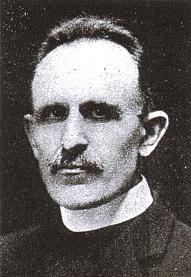
J. L. Neve
Return to
the Lutheran Theology Web Site Home
Page