Is Ordination Necessary?
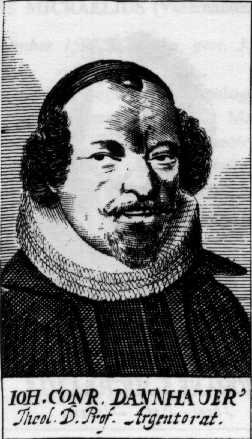
JOHANN CONRAD DANNHAUER
(From Liber conscientiae apertus, sive theologiae conscientiae, pp.
230, 1005-06; quoted in C. F. W. Walther, Church and Ministry [Saint
Louis: Concordia Publishing House, 1987], pp. 265-67.)
 Origen was not
ordained, but when persecution set in, he went to Jerusalem, where he was
permitted to preach and administer the sacraments. But Demetrius, the bishop
of Alexandria, disliked this, because thereby the canons of the church were
not observed. However, Alexander, bishop of Jerusalem, answered him very aptly
that nothing is done against custom if anyone teaches and administers the
sacraments without ordination, as long as he has been called. ...
Origen was not
ordained, but when persecution set in, he went to Jerusalem, where he was
permitted to preach and administer the sacraments. But Demetrius, the bishop
of Alexandria, disliked this, because thereby the canons of the church were
not observed. However, Alexander, bishop of Jerusalem, answered him very aptly
that nothing is done against custom if anyone teaches and administers the
sacraments without ordination, as long as he has been called. ...
Is ordination
necessary for conscience’ sake? It certainly is necessary, but not because of
any necessity of purpose or means (as though the purpose in view could only be
accomplished by this means); for also without ordination Paul and Barnabas
(Acts 9:24), as well as Aquila and Priscilla, Frumentius and Aedesius, could
effectively administer the office of the ministry. It was therefore an
unnecessary and purposeless anxiety that caused the Bohemian Brethren to deal
with the question whether an ordination is legitimate if an elder chose an
elder but not a bishop; therefore, they cast lots to decide the question, as
the Moravian Comenius relates. Nevertheless, it (ordination) is necessary
according to the necessity of an apostolic and positive (not moral) command:
“Separate to Me Barnabas and Saul” (Acts 13:2) and the ancient apostolic
custom (1 Tim. 5:21). There is also a necessity that accrues from the benefit
that the examined and unexamined teachers of the church may be distinguished
and no one may raise the accusation that the Lutherans often use certain
scholars who are not yet ordained with the laying on of hands as vicars,
permitting them to hear confession, feed the sick, and administer Holy
Communion. Nor should anyone think that the case of a pastor and a reporter
were one and the same. ... Thus the solemnization of a marriage by a pastor is
not absolutely necessary. Nor is a bridal wreath necessary, though it is
beneficial to use this ornament. Nor is the crowning at Frankfurt something
without which the Roman emperor could not exist; yet it serves to enhance the
glory of the emperor.
Who then is the
opponent of good order who superciliously despises this custom? He is neither
peaceful, because he goes counter to the church, nor conscientious, because he
regards the means that serve to calm consciences as worthless; but he is an
obstinate ass.
Return to
the Lutheran Theology Web Site Home Page